The Art of Pairing: How to Select Photography for Interior Spaces
January 2026
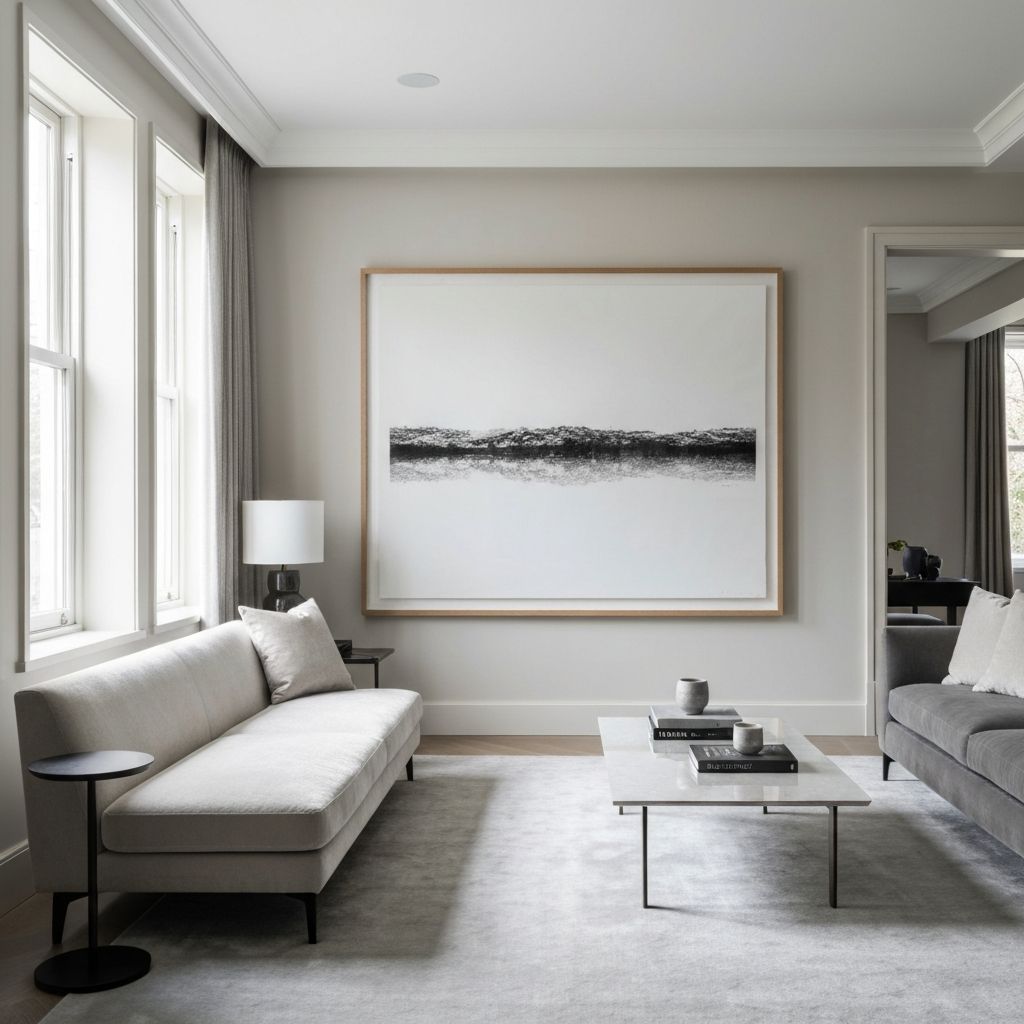
Selecting artwork for interior spaces is far more nuanced than simply matching colours to a sofa. When done thoughtfully, photographic art becomes an integral part of the spatial narrative, influencing mood, directing attention, and creating lasting impressions on those who inhabit or visit the space.
Understanding Scale and Proportion
The relationship between artwork and wall space is fundamental. A common mistake is selecting pieces that are too small for a given wall, leaving them looking lost and insignificant. As a general principle, artwork should occupy approximately two-thirds to three-quarters of the available wall space above furniture.
For large, open walls, consider either a single statement piece or a carefully curated grouping. My Architecture collection works particularly well as statement pieces, with the geometric forms and dramatic shadows commanding attention without overwhelming the space.
Creating Visual Dialogue
The most successful interiors create conversation between elements. Photography can echo architectural details, complement material textures, or introduce a counterpoint that adds interest. When selecting pieces, consider what story you want the room to tell.
A minimalist space with clean lines might benefit from botanical imagery that introduces organic softness without disrupting the overall aesthetic. Conversely, a room with traditional furnishings might be elevated by contemporary architectural photography, creating an unexpected dialogue between old and new.
The Role of Tone and Mood
Beyond colour matching, consider the emotional register of the imagery. Soft, diffused light in photography creates calm and serenity, while dramatic shadows introduce energy and sophistication. The Travel collection offers pieces that evoke wanderlust and contemplation, perfect for spaces designed for relaxation and reflection.
Practical Considerations
Lighting dramatically affects how artwork appears throughout the day. North-facing rooms receive consistent, cool light, while south-facing spaces experience warm, shifting illumination. Consider how the work will appear at different times and whether artificial lighting will be needed to showcase the piece properly.
For spaces with significant natural light, consider UV-protective glazing to preserve the artwork over time. All prints from my studio are produced using archival-quality materials and can be specified with museum-grade glass for maximum longevity.
Working Together
Looking for guidance on selecting artwork for your project?
I work directly with interior designers and private clients to curate collections tailored to specific spaces and briefs.
Get in TouchBuilding a Cohesive Collection
For larger projects spanning multiple rooms, consider developing a cohesive collection that creates visual continuity while allowing each space its own character. This might mean selecting works from a single collection or carefully pairing pieces that share tonal qualities or compositional approaches.
The most impactful interiors treat art acquisition as an integral part of the design process rather than an afterthought. When artwork is considered from the earliest stages, it becomes woven into the spatial narrative rather than simply applied to finished walls.